WHAT IS HRD?
Homologous Recombination Deficiency (HRD) describes when a cell loses its ability to repair double-strand DNA breaks, using the homologous recombination repair (HRR) pathway.1 When the HRR pathway is compromised, genomic alterations and genomic instability can occur, contributing to cancerous tumor growth.

HRD is a common characteristic of the following cancer types…

Ovarian Cancer2
High-grade serous ovarian cancer (HGS-OvCa)
- 17% carried germline mutations in BRCA1/2
- 3% somatic mutations in BRCA1/2
- HRR-modulating genes altered in ~ 50% of samples

Breast Cancer3
Triple-negative breast cancer (TNBC)
- 20% had either somatic or germline mutations in BRCA1/2

Prostate Cancer4
Metastatic castration resistant prostate cancer(mCRPC)
- ~19% had mutations in BRCA1/2, BRCAness genes (ATM,CDK12)

Pancreatic Cancer5
Pancreatic ductal adenocarcinoma (PDAC)- 17% had germline mutations in BRCA2
- 24% germline or somatic mutations in BRCA1/2.PALB2
- 8% had mutations in ATM
- Lord.C., Ashworth, A BRCAness revisited Na Rey Cancer 16, 110-120(2016).
- The Cancer Genome Atlas Network. Comprehensive molecular portraits of human breast tumors. Nature 490.61-70(2012).
- The Cancer Genome Atlas Research Network Integrated genomic analyses of ovarian carcinoma. Nature 474, 609-615(2011).
- Robinson, D.et al. Integrative clinical genomics of advanced ceostatecancerCel161.1215-1228(2015).
- Waddel, N.et al. Whole genomes redefine mutational landscape of pancreatic cancer. Nature 518, 495-501(2015).
When a tumor exhibits HRD, the patient may be eligible for treatment with PARP inhibitors. PARP inhibitor indications have expanded over the last few years, due to promising data generated from different clinical trials.
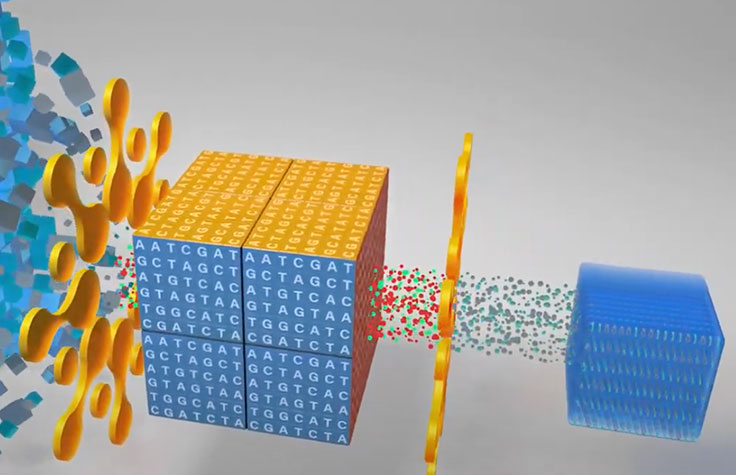
While there are various ways to test for HRD, Next Generation Sequencing (NGS) is emerging as a strong technology that can assess both causal genes and genomic scarring together, in one assay. Watch below for an introduction to HRD and learn about the different components involved in evaluating this composite signature.
Learn more about HRD and how to test for itMaximizing Comprehensive Genomic Profiling insights with HRD detection
Comprehensive Genomic Profiling (CGP) uses next-generation sequencing (NGS) technology to assess hundreds of genes for relevant cancer biomarkers, as established in guidelines and clinical trials, to guide therapy selection. HRD is a genomic signature which can be included with CGP testing, or as a stand alone test.
As our understanding of HRD expands beyond causal genes like BRCA1 and BRCA2, there are many other genes which may affect the HRR pathway and could be included in a CGP test. Comprehensive Genomic Profiling also has the power to identify rare mutations and other relevant genomic signatures in Ovarian, Breast, Prostate and Pancreatic cancers such as Tumor Mutational Burden (TMB) and Microsatellite Instability (MSI).
Download the guide below to learn about the benefits of including HRD with CGP testing.****NOTE: For gating of HRD Guide, regions may collect info in Salesforce from those that download the guide, however the SFDC campaign must be flagged as “no sales contact.” The reason is that we cannot target customers who download product agnostic content with TSO 500 HRD materials. You are still allowed to contact these leads with other assets like CGP campaign materials, but not anything TSO 500 or TSO 500 HRD related.